

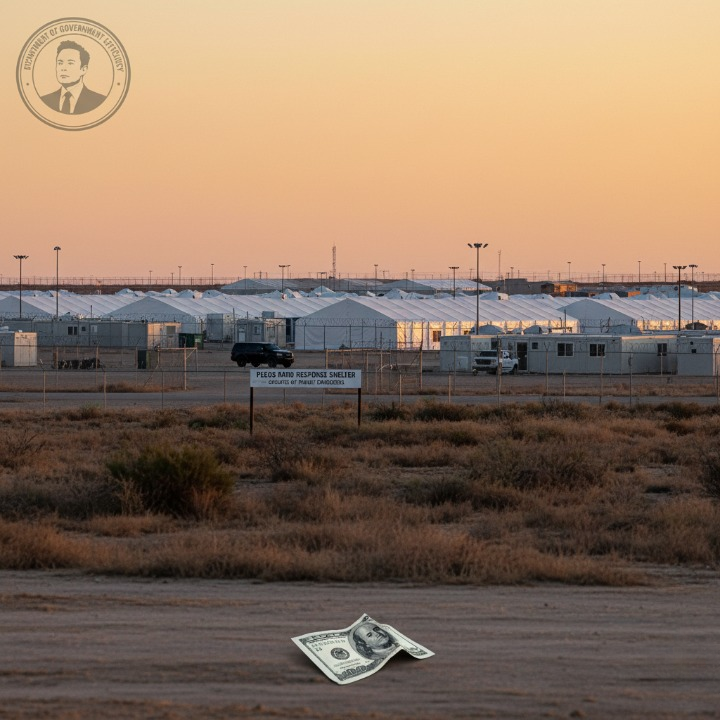
In early 2025, a significant controversy emerged involving the Department of Government Efficiency (DOGE), led by Elon Musk, and the Department of Health and Human Services (HHS). The issue centered on a $18 million per month contract with Family Endeavors, a San Antonio-based nonprofit, to operate a migrant housing facility in Pecos, Texas. Despite receiving substantial federal funds, the facility remained empty, raising questions about government spending and oversight.
The Pecos Facility: An Empty Investment
The Pecos facility, designed to house unaccompanied migrant children, was maintained in a “cold status,” meaning it was kept operationally ready but not actively housing children. This arrangement allowed for rapid activation if needed but also meant that taxpayers were footing the bill for an unused facility. Reports indicated that the facility had been empty since March 2024, yet Family Endeavors continued to receive $18 million monthly for its upkeep.
Financial Implications
Family Endeavors’ financial trajectory saw a dramatic increase during the contract period. From a revenue of $8.3 million in 2020, the organization’s finances soared to $520.4 million by 2023. This surge raised concerns about the allocation of federal funds and the organization’s financial practices.
DOGE’s Intervention
DOGE, established to identify and eliminate wasteful government spending, scrutinized the contract and deemed it an example of inefficiency. In February 2025, DOGE announced the termination of the contract, citing the facility’s prolonged vacancy and the substantial taxpayer funds expended. This move was part of a broader initiative to reduce federal expenditures and increase accountability.
Public and Political Reactions
The termination sparked a range of reactions. Supporters of DOGE lauded the decision as a necessary step toward fiscal responsibility. However, critics argued that the cancellation could have negative implications for future emergency preparedness and the treatment of migrant children. The controversy also highlighted the complexities of balancing cost-saving measures with humanitarian concerns.
Conclusion
The DOGE HHS migrant housing contract scandal underscores the challenges of ensuring efficient use of taxpayer funds while addressing critical social issues. It serves as a case study in government oversight, financial transparency, and the complexities of managing public resources in sensitive areas such as immigration and child welfare.
